


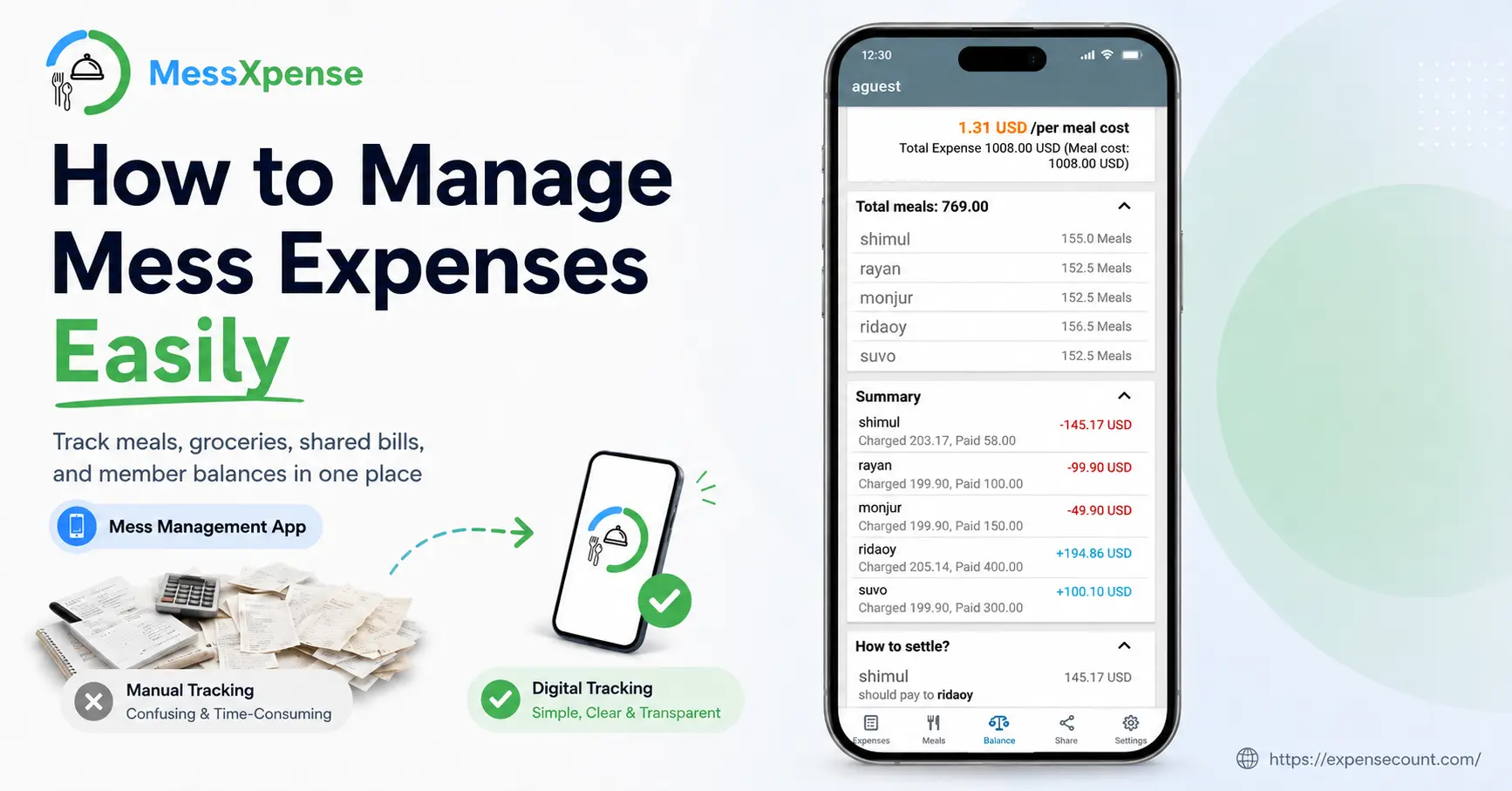
Managing expenses in a shared mess can quickly become confusing. Every month, members have to deal with meal costs, groceries, rent, electricity, gas, internet, cleaning supplies, and other household expenses. When everything is recorded manually in notebooks, spreadsheets, or chat messages, it becomes difficult to know who paid, how much each person owes, and whether the calculations are accurate.
A mess management app can make this process much easier by keeping meals, expenses, payments, and member balances organized in one place.
What Is a Mess Management App?
A mess management app is a digital tool designed to help people living together manage their shared household and meal-related expenses.
Instead of maintaining separate notebooks or spreadsheets, members can record their daily meals, grocery purchases, utility bills, and other expenses digitally. The app can then help organize the information and make it easier to understand each member's share.
For students, bachelors, roommates, and people living in shared accommodation, this can significantly reduce the time and effort required to manage monthly expenses.
Why Is Managing Mess Expenses Difficult?
Shared living usually involves many different types of expenses. For example, one person may purchase groceries while another pays the electricity bill. Someone else may pay the monthly rent or internet bill. At the end of the month, everyone needs to calculate their individual share.
Common problems include:
- Forgetting who paid for an expense
- Incorrect meal counts
- Difficulty calculating meal rates
- Losing receipts or payment records
- Confusion about grocery expenses
- Disagreements about shared bills
- Spending too much time calculating monthly balances
- Maintaining multiple notebooks or spreadsheets
These problems become even more complicated when several people are sharing the same mess.
How a Mess Management App Can Help
A dedicated mess expense management app can organize all these records in one place.
1. Track Daily Meals
One of the most important parts of managing a mess is keeping track of daily meals. Instead of writing meal information in a notebook, members can record their meals digitally. This makes it easier to calculate total meals for each member during the month.
For example, if one member eats 70 meals while another eats 85 meals, their food costs may not be the same. Keeping accurate meal records helps create a fairer calculation.
2. Keep Grocery Expenses Organized
Grocery shopping is another major part of mess expenses. Rice, vegetables, meat, fish, cooking oil, spices, snacks, and other household items can add up quickly. When different members purchase these items at different times, it can become difficult to track the total amount.
A mess management app allows members to record these expenses and keep a clear history of who paid for what.
3. Manage Shared Bills
Mess expenses are not limited to food. Recording shared bill expenses in one system makes monthly expense management much easier.
Members may also need to share:
- House rent
- Electricity bills
- Gas bills
- Internet bills
- Water bills
- Cleaning expenses
- Household supplies
4. Know Who Paid
One of the biggest advantages of digital expense tracking is payment transparency. Whenever someone pays for groceries, rent, utilities, or another shared expense, the payment can be recorded. This creates a clear record of who contributed money.
At the end of the month, members don't have to depend on memory or search through old chat messages to find payment information.
5. Reduce Calculation Errors
Manual calculations can easily lead to mistakes. For example, when you have multiple members, dozens of grocery purchases, hundreds of meals, and several utility bills, calculating everything with a calculator or spreadsheet can become time-consuming.
A digital system helps organize the information and reduces the possibility of calculation mistakes.
How to Calculate Mess Expenses
A typical monthly mess calculation may include several components. First, calculate the total food expenses for the month.
For example:
Total Food Expense = Grocery + Market + Other Food Costs
Then calculate the total number of meals consumed by all members.
Meal Rate = Total Food Expense ÷ Total Meals
A member's food cost can then be estimated based on the number of meals they consumed.
Member Food Cost = Member Meals × Meal Rate
Other shared expenses, such as rent, electricity, gas, and internet, can then be added according to the agreed sharing method.
This may sound simple, but when there are many members and expenses, doing everything manually every month can take a significant amount of time.
Why Digital Tracking Is Better Than a Notebook
Many messes still use notebooks to record expenses and meals. While this method can work for a small group, it becomes difficult to maintain as the number of members and transactions increases. A digital mess management solution provides several advantages:
- Better organization: All records can be kept together
- Easy tracking: Members can check expense and meal information when needed
- Less confusion: Payment records are easier to understand
- Faster calculations: Monthly expenses can be organized without going through pages of handwritten records
- Greater transparency: Members can see how shared expenses are being managed
Manage Your Mess Expenses with MessXpense
MessXpense is designed to make shared mess and household expense management easier. Instead of relying entirely on notebooks, spreadsheets, or scattered chat messages, you can keep important expense information organized digitally.
With MessXpense, you can manage meal-related information and shared expenses while keeping track of different types of household costs. Whether you are a student living in a mess, a group of roommates, or a shared household, having an organized expense management system can make monthly financial management much simpler.
Download MessXpense for Android: Download from Google Play
Download MessXpense for iOS: Download from App Store
Final Thoughts
Managing a shared mess does not have to be complicated. The real problem is often not the amount of money being spent but the difficulty of keeping track of everything.
From daily meals and groceries to rent and utility bills, a mess management app can help bring all shared expenses into one organized system.
By replacing scattered notebooks, calculations, and chat messages with digital expense tracking, mess members can save time, reduce confusion, and make expense management more transparent.
Frequently Asked Questions (FAQs)
1. What is a mess management app?
A mess management app is a digital tool that helps people living together manage shared expenses, meals, groceries, rent, utility bills, and other household costs in one organized place.
2. How can a mess management app help students?
A mess management app can help students track daily meals, grocery expenses, shared bills, and payments. It can also reduce manual calculations and make it easier to understand each member's monthly expenses.
3. Can I track meal expenses in a mess management app?
Yes. A mess management app like MessXpense can help you record and organize daily meals and food-related expenses. This makes it easier to calculate meal costs and manage monthly food expenses.
4. How can I split expenses among mess members?
Shared expenses such as groceries, rent, electricity, gas, and internet can be recorded and divided among the members according to your agreed sharing method. Keeping payment records also makes it easier to determine who has paid and who still owes money.
5. Why should I use MessXpense for managing mess expenses?
MessXpense helps simplify shared mess expense management by keeping meal and expense information organized in one place. It can help students, roommates, and shared households manage their regular expenses with less confusion and manual calculation.